
Events

On-demand

Past event

Sustainable solvent recycling on-site with automated rotary evaporation systems

With the steadily increasing costs of solvents and the huge CO2 emissions associated with the production of new solvents, on-site solvent recycling is not only a suitable way to reduce operating costs in the lab but also a sensible step towards more sustainable processes. An example is the life cycle of acetone: the production of 1 ton of acetone causes about 2000 kg of CO2 carbon footprint. Usually, used solvents are not directly recycled but replaced by fresh solvents from specific suppliers. The used solvents have to be handled by specialized companies that transport the collected solvents over a long distance to their recycling facilities. This logistical process causes further CO2 emissions, which can be avoided by an on-site recycling process. Rotary evaporation is usually one of the most common techniques for solvent separation in the laboratory. The idea of rotary evaporation is well-known and is a proven technique in most laboratories. Smart systems that automate all liquid management in the rotary evaporation process not only make it possible to automate this proven technique, but also to turn a typical rotary evaporator into a 24/7 solvent recycling station.

In this webinar, you will learn how this principle works and for which applications it can be used. In addition, the webinar includes a case study from the University of Nottingham that reduced the need for virgin acetone by 90%, thereby reducing the carbon footprint and investment required for virgin solvents

Past event

Automating the laboratory: Maximizing efficiency through smart solutions

Part I: Automating the laboratory: Choosing the right concept

Automation has reached ever larger areas recently. Due to the development of numerous new, cost-effective automation devices and modules, the automation of laboratory processes is also of increasing interest to small and medium-sized companies and research laboratories. Different degrees of automation from the automation of individual sub-steps to partial automation and finally full automation without manual intervention by an operator are possible. The selection of a suitable automation concept depends on various factors. In addition to the process itself, which with its sub-processes sets the requirements and framework conditions for automation, other parameters such as space requirements, investment, operating costs, planned operating times, and throughput are also important. The selection process for a suitable concept will be shown for a process in the area of material research.

Part II: Lab automation: How can smaller laboratories benefit?

Besides enabling higher throughput, laboratory automation has numerous advantages. These include, for example, improved quality of measurement results, reduced workload for employees, or improved safety when hazardous chemicals are involved. However, in most small laboratories, many processes are not yet automated because existing laboratory automation solutions are usually expensive and inflexible to use. Examples of this are autosamplers that are only compatible with one specific laboratory instrument or larger liquid handling stations that are expensive and usually self-contained. Here, we provide insights into solutions that are particularly suitable for smaller laboratories to enable cost-effective and flexible laboratory automation.

Past event

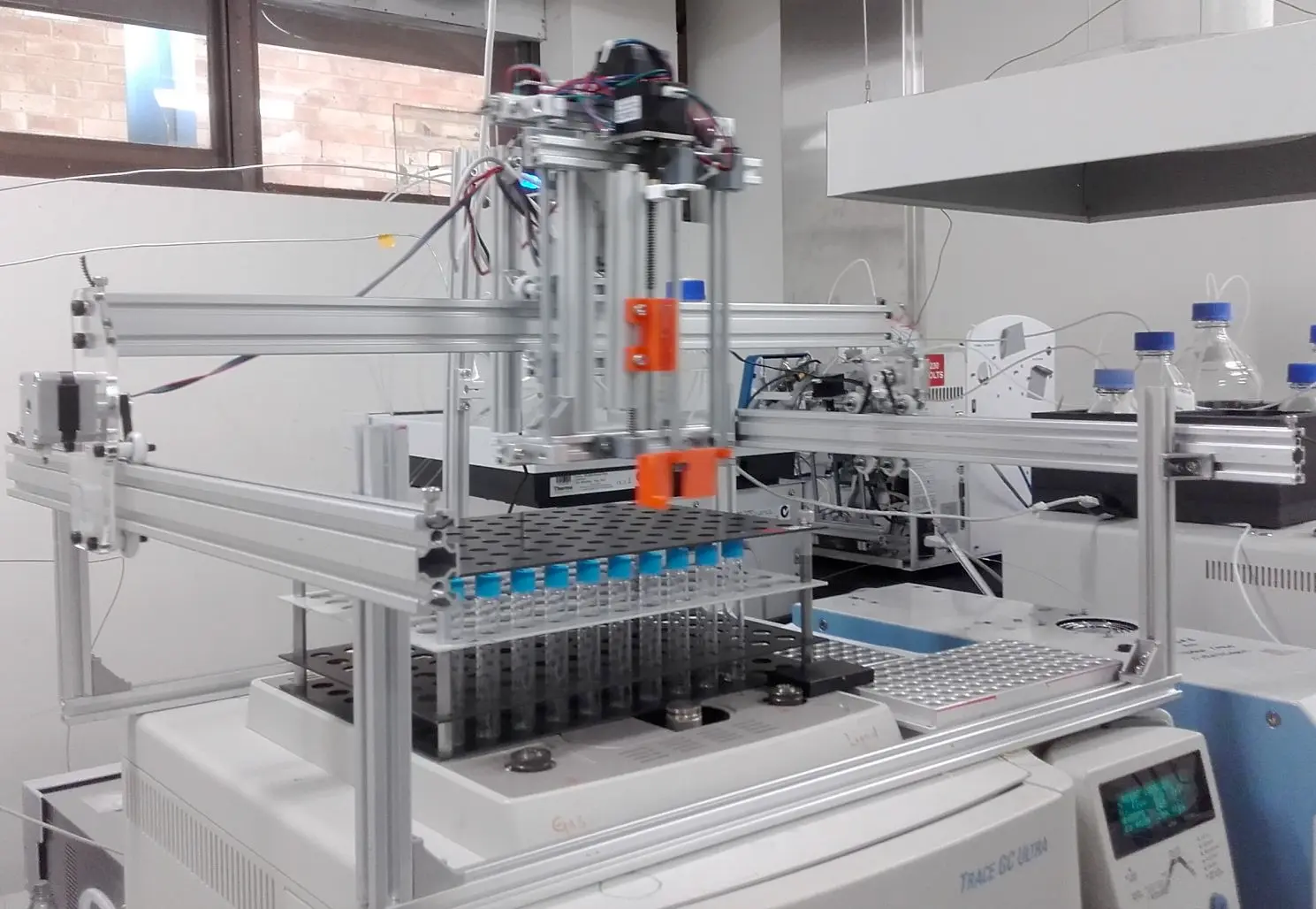
DIY robots for your lab – the first steps

Have you ever considered employing robots to boost productivity in your lab, but then gave up due to the high costs involved? In this webinar you will learn the first steps to build custom simple robots that can do useful tasks without costing exorbitant amounts of money. The steps are:

  • Learn the right kind of robot for use in simple automation tasks
  • Learn the right kind of motor to build the robots
  • Learn how to control the motors using a computer or smartphone
  • Learn how to integrate the robots to any analytical device already in use in the lab
  • Learn how to use this approach to resuscitate old robots and get them cheap in the second-hand market

Don’t miss this opportunity, keep pace with the technology!